Co-op Crews
Team up for shared objectives and campaign nights. The room usually plays co-op adventures, action RPGs, and team-based missions.
At Dota2protracker, good sessions start with people who show up, share the mic, and make room for new players. Our guild rooms have clear hosts and a moderator route when a conversation needs attention.
Make room for good play.
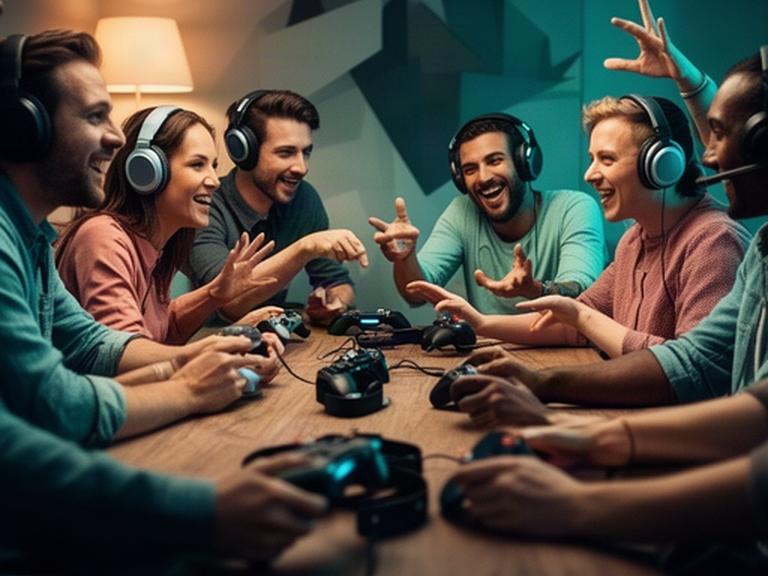
Choose a room by the way you like to play. Room membership is included with Guild Standard and All-Access Crew plans.
Pick a room. Show up.
Team up for shared objectives and campaign nights. The room usually plays co-op adventures, action RPGs, and team-based missions.
Take your time with turn-based tactics and management games. Sessions leave space for planning, discussion, and a few long turns.
Bring a build in progress or start one with the group. Members trade practical tips around sandbox, simulation, and crafting games.
Get a patient introduction to room tools and group play. Hosts pick approachable co-op and party games for each session.
Make a plan, then meet your room host at the listed start time. All times are Pacific Time.
Show up. Play together.
Room: New Player Welcome
Room: Co-op Crews
Room: Late Night Strategy
Room: Builder Circle
Outside California? Pacific Time is UTC−8 in standard time and UTC−7 during daylight saving time. Check your local clock before joining.
Standings count participation hours and completed co-op sessions. They’re for room bragging rights only; there are no reward mechanics attached.
Hours tell part of it.
Each season resets at the start of a new quarter. Fresh sessions start a fresh table, so regular participation matters more than an old total.
| Rank | Display name | Hours | Co-op sessions |
|---|---|---|---|
| 01 | MapleCircuit | 18.5 | 12 |
| 02 | QuietComet | 16.0 | 10 |
| 03 | PixelHarbor | 14.5 | 9 |
| 04 | JuniperQuest | 12.0 | 8 |
Illustrative season snapshot · refreshed quarterly
Good sessions need clear expectations. Keep voice chat useful, respect the people in the room, and raise a concern early.
Keep it playable.
Need a moderator? Send the details to [email protected], including the room name and approximate session time.
Read the full Terms and Conditions and Privacy Policy.
Guild Standard and All-Access Crew include guild room membership. Choose a plan and pick the room that fits your play style.
Your seat starts here.
Competitive Dota 2 involves a constant stream of decisions that extend far beyond mechanical skill. Dota2ProTracker gives users a way to examine professional match information and explore how experienced players approach different phases of a game. By comparing individual performances, users can investigate lane management, farming priorities, team coordination, and tactical adjustments. These observations provide practical reference points for understanding competitive gameplay and developing a more deliberate approach to personal improvement.
An effective item progression reflects the demands of a particular match rather than a universal formula. When studying professional games, users can pay attention to purchase order, the timing of major upgrades, and the circumstances surrounding alternative choices. Dota2ProTracker can help identify examples worth investigating further. Comparing several performances with the same hero makes it easier to recognise when a standard build is appropriate and when adapting equipment to enemy threats or team objectives may be more beneficial.
Matchup research can reveal how experienced players respond to opponents with different abilities, strengths, and weaknesses. Users can examine early purchases, lane behaviour, ability development, and transitions into later stages of the game. Reviewing multiple examples is particularly valuable because the same matchup may produce different challenges depending on team compositions and player decisions. These findings can help users prepare for difficult encounters while remembering that professional results do not guarantee an identical outcome in their own matches.
A match result offers only a partial explanation of what happened during a game. To explore the factors behind a win, users can compare performance indicators, hero selections, progression choices, and the overall circumstances of the contest. Professional records may reveal patterns that deserve closer attention, but statistics alone rarely explain every important decision. Considering the interaction between individual performance and team strategy provides a more balanced understanding of why a particular approach succeeded or failed.
Players often improve more efficiently when they work on a clearly defined weakness. Professional match records can help them identify techniques to practise, whether the goal involves improving resource efficiency, adjusting item timings, or making better decisions during engagements. Users can select a relevant example, apply the underlying idea in their own games, and review the results afterward. This process turns match research into a repeatable learning routine and makes it easier to assess progress over time.
Each position in Dota 2 comes with distinct responsibilities, and professional players adjust their priorities accordingly. Examining matches across different roles can illustrate variations in farming patterns, map presence, resource allocation, and team support. Users can investigate how these responsibilities affect decisions throughout a game and identify habits suited to their preferred position. Understanding the purpose behind each role also helps players cooperate more effectively with teammates and recognise how individual tasks contribute to a shared strategy.
A build that performs well in one game may be less effective when the opposition or strategic requirements change. Enemy damage types, disabling abilities, available farming space, and the need to protect teammates can all influence purchasing decisions. Professional examples are most useful when treated as evidence of possible solutions rather than mandatory instructions. By identifying the problem an item addresses, players can make more informed choices and adjust their equipment as the match develops.
Hero popularity can change as patches introduce balance adjustments and teams discover new tactical possibilities. Comparing professional games from different periods can reveal shifts in selection patterns, role assignments, and preferred combinations. Dota2ProTracker can provide a starting point for examining these developments through recorded performances. When interpreting historical trends, users should consider the game version and competitive environment, since strategies that were effective under earlier conditions may no longer offer the same advantages.
Team fights depend on several interconnected factors, including positioning, initiation, target selection, ability timing, and awareness of enemy resources. Match statistics may help users locate encounters that are worth studying, while available replay footage can provide a clearer view of how events unfolded. Observing the sequence of decisions is often more informative than focusing exclusively on the final number of kills. This approach encourages players to understand the reasoning behind successful engagements and identify mistakes they can avoid.
Players who are still learning the fundamentals should concentrate on a small number of useful lessons at a time. They might study how a professional manages the opening minutes, chooses a first major item, or responds when an opponent becomes stronger. Applying one concept during several matches makes it easier to evaluate whether the idea fits their current skill level. Gradually expanding this process allows beginners to build a stronger foundation while developing the flexibility needed to make independent decisions in changing game situations.